
Is Your Art Gallery Website Holding You Back? 7 Signs It's Time for a Change
A gallery website should work as hard as you do — promoting exhibitions, showcasing artists, and generating enquiries around the clock. But when the site itself becomes a source of frustration, it's worth asking whether it's actually helping your gallery or quietly holding it back. Here are seven signs it might be time for a change.
1. You dread making updates
If your instinct when a new exhibition is confirmed is "ugh, now I have to sort out the website," that's a red flag. Your website should be a tool you reach for, not a chore you put off. (Applies to all websites! That’s one of the main reasons why my clients come to me to switch to Squarespace.)
2. You're paying for changes you could make yourself
Small text edits, new images, updated opening hours — if you're paying a developer's hourly rate for tasks that should take minutes, the cost of "convenience" is adding up fast, and it isn't even that convenient. (Happens to sooo many websites. I tell all my clients I hand over the website to them after launch, and they are all surprised that there is no monthly maintenance package needed!)
3. Updates take days or weeks, not minutes
Exhibitions are time-sensitive. If it takes a week to get a new exhibition listed on your homepage, your website is permanently behind your actual programme.
4. You don't understand your own site's structure
If someone else built your website and you've never really understood how the pages fit together, you're not in control of it — you're a guest on it.
5. Your platform costs more than it needs to
Some gallery-specific platforms, like Artlogic, come with significant subscription costs on top of setup fees. For many small and independent galleries, that's a heavy monthly cost for features they may only use a fraction of (not an uncommon reason when art galleries reach out to me!).
6. You've stopped adding new work promptly
If new artwork sits in the back room for weeks before it appears online because updating the site is such a hassle, you're losing sales opportunities in real time.
7. You've thought "there has to be a better way"
If you've ever searched for an easier alternative, browsed template marketplaces, or asked another gallery owner what they use — trust that instinct. It usually means something isn't working.
What "more flexible" actually looks like
A flexible gallery website doesn't mean sacrificing professionalism or design quality. It means a visual editor you can use without technical skill, a structure already built around exhibitions, artists, and works, no developer required for day-to-day updates, and reasonable, predictable costs.
If any of these signs sound familiar, take a look at my Squarespace Art Gallery Template and see what a more flexible setup could look like for your gallery.
Related reading: Why Developer-Dependent Gallery Websites Hold You Back
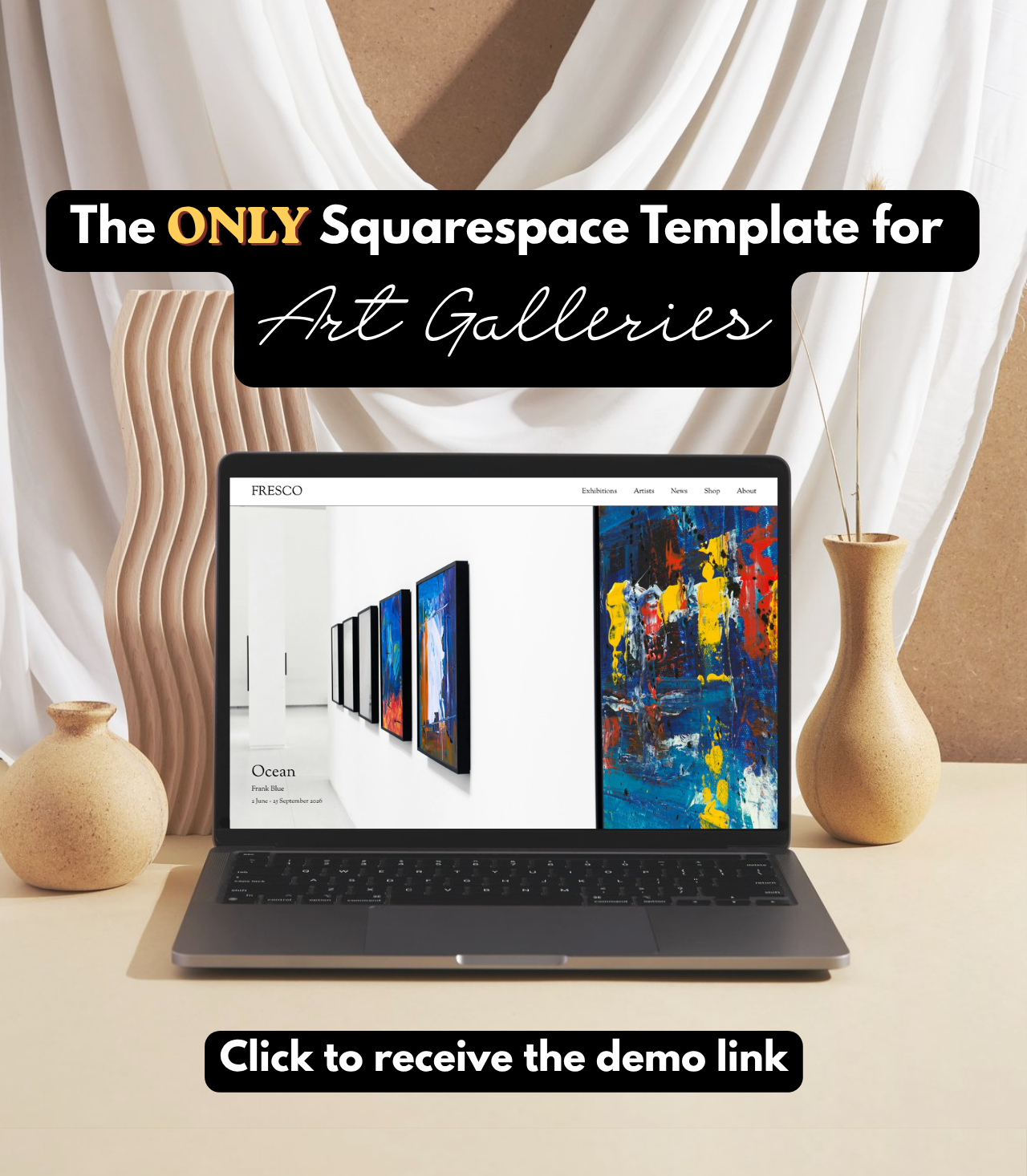
Created for galleries, editable by galleries
When art galleries started asking me to build them Squarespace websites, I KNEW there should be an easier way; and thus the Studio Fresco Squarespace template was born.
